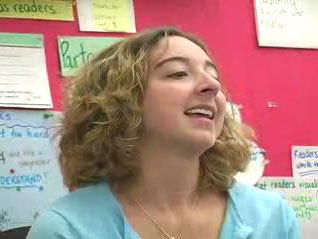
Having been inspired by my own childhood teachers, I decided that teaching would be a powerful way for me to honor how important, special, and intelligent every student is. I believe that we as teachers have the power to change the world through the education and empowerment of our students. more >>
Why and how I become a teacher
Although my teaching has developed in many ways over the past few years, my reasons for becoming a teacher--and my reasons for staying committed to this work--remain the same. When I decided to become a teacher I could not yet articulate - nor had I fully developed - the passion I now have for teaching. I did know that two sets of childhood memories were key in my decision. First: memories of teachers whom I loved because they cared about me and because they told me I was doing great work. They made sure I understood what I was learning, which was essential to my success. Second: memories of a few teachers who disrespected students. I wondered how and why they had pursued teaching. I decided that by becoming a teacher, I would ensure all of my students knew how important, special, and intelligent they were. I wanted students to feel excited about learning and to truly understand what was being taught.
I still possess all of these beliefs. Now I understand even more clearly the important role I hold in our society as an educator. Educators have the power to make changes for our world through the education and empowerment of our students. As I continue to develop my teaching practices--gaining more knowledge about strategies, assessment, planning, and creating responsive and learning communities in my classroom - I keep my passion for motivating students at the heart of my work.
My professional history
I've entered the fifth year of my career as a teacher at Glider Elementary School in the Oak Grove School District. I taught kindergarten for three years, and I've now entered my second year of teaching second grade. I spent two years studying literacy education in San Jose State University's M.A. program, which has a strong focus on equity. This year I am also working part-time as a literacy coach at Glider.
Why and how I began to focus on writing
Days before I welcomed my first group of students into my classroom, a district writing coach shared stories of her powerful experiences with kindergarten writers, which had resulted from her work with the ECRW initiative. I had never experienced a writing workshop in school. Little did I know, that first conversation about a kindergarten writing workshop began my challenging, inspiring, and fulfilling journey as a writing teacher. Through conversations and collaboration with colleagues, Katie Wood Ray's Wondrous Words, and a seemingly magical experience of kindergarteners learning to write before my eyes, I was inspired to learn more - both about myself as a writer, and how to help students develop as writers. In the years that followed, a principal and a group of dedicated teachers brought the ECRW initiative to our school. Since that time, I've had the privilege to be part of this work on a daily basis.
My history as a writer - strengths and struggles
Throughout my elementary and middle school years, the highlights of my writing life included school assignments, essays, reports, answering questions, responding to prompts, and a few opportunities to author my own narratives or fictional stories. I first remember feeling proud of my writing in high school, when a teacher complimented me on the voice and description I'd used in an essay I had written. As I recall, the piece was very personal, and I felt especially proud after receiving the compliment. Although I wrote a great deal for high school and college assignments, I found writing to be challenging. Many time, the feedback I received focused on the story's content rather than on its qualities.
Once I began teaching writing, I began to learn about myself as a writer - and I began to develop my skills. I learned the importance of studying other writers' work while considering my own style of writing and strengths. I had been writing well, but I wasn't aware of the decisions I made while writing or the process I used. While I learned to teach my students to write, I began my own reflection and work.
I feel that my writing strengths vary depending on the genre in which I am writing. When I am writing an expository piece, I'm an organized and detailed writer. In narrative writing, I become reflective, possess a defined voice, and develop small scenes with detail. I enjoy narrative writing because I feel that I can write as I would speak. I also enjoy thinking carefully about ways to paint a picture to engage the reader.
Areas that I'm working to improve include planning, drafting, and word choice. I continually challenge myself to increase my speaking and writing vocabulary. I tend to repeat the same words in my writing. At times, I have difficulty finding specific and descriptive words. Now, as I read, I take note of words I may want to include in my own writing.
For many years, I drafted my work in the same manner, beginning with the first paragraph and moving through the piece step by step. Now when I'm planning and drafting, I give myself the freedom to begin my pieces at different places and to rely on revision to bring different sections and ideas together. I also experiment with various beginnings and closings, and explore the many complex ways I can journey through the writing process.
When I read my own books at home now, I find myself reading as a writer. When I read a passage that demonstrates how an author crafted language to convey a particular feeling or point, I mark it with a sticky note. Then I can share that example with my students or use it to guide my own writing. It has been exciting to learn with and from my students.
^ close





 Videos