Clip Description
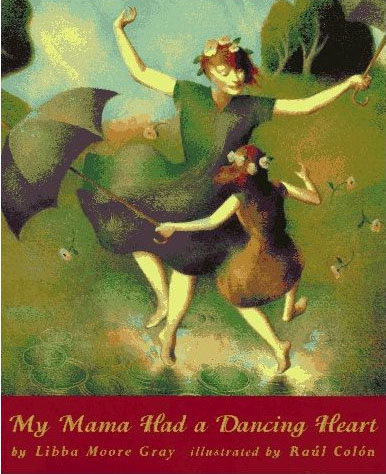
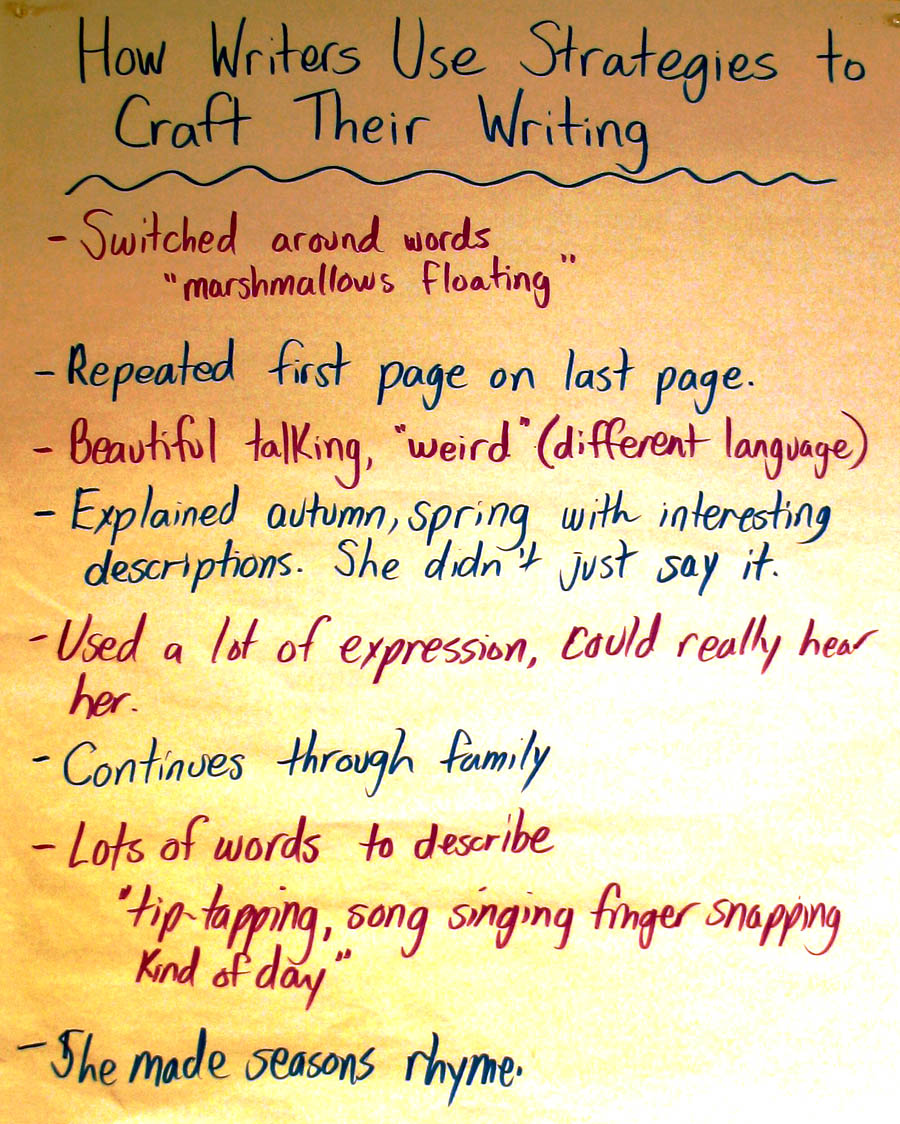
In this clip, I reread My Mama Had a Dancin' Heart by Libba Moore Gray. I ask students to listen for beautiful language and other writing strategies in the story. Students think of examples individually, then share with a partner, and finally, share with the entire class. We record our noticings on chart paper.
Commentary
This is the "Active Involvement" part of the mini-lesson. Since students have already heard this story, they are now able to focus on an aspect of the writing craft. Here, they listen for beautiful language and other writing strategies to get the message across to the reader. After I finish reading, I give the students a chance to think to themselves. Then, to help boost their confidence, they share their ideas with a partner. Finally, if they like, they can share with the entire class. Our recorded findings on chart paper serve as a reference and resource throughout the unit.
Transcript
| TEACHER: |
My Mama Had A Dancing Heart [by Libba Moore Gray]. With a grin and a giggle, a hug and a whistle, we'd slap our knees and Mama would say, bless the world, it feels like a tip tapping, song singing, finger snapping kind of day. Let's celebrate and so we did. And afterward I imagined that I'd hear my Mama saying, bless the world it feels like a tip tapping, song singing, finger snapping kind of day. Let's celebrate. My Mama had a dancing heart and she shared that heart with me.
So think about it just for a second. Think about something in that book that you really liked. Something beautiful, something she did that was different, something that was - that really - that you remember. Just think about it for a second to yourself. It's such a beautiful book, thinking of all the things that I noticed. Now turn to somebody near you, make sure everybody gets included, turn to somebody near you and tell them one thing you heard that you liked about [unclear]. |
| [Children talking amongst themselves] | |
| STUDENT: | She remembered about that her mother that she wrote about that. |
| STUDENT: | When she danced? |
| STUDENT: | Remember that part? After - |
| STUDENT: | She used like words like, you know, like in the poem, she said, like, leaves and stuff. And then like in the summer she went to the beach and everything. And like how she - she said her toes squashed in the sand. |
| TEACHER: | All right, great job. Okay let's share a couple of things that you heard or that stuck out to you. That Libba Moore Gray did, the strategy she used to make her writing so beautiful and to get her message across. Angela what did she do? |
| STUDENT: | She switched around some words like marshmallows floating. |
| TEACHER: | Good. She switched around the words and what was the example you gave me again? |
| STUDENT: | Like marshmallows floating. |
| TEACHER: | Good, marshmallows floating instead of floating marshmallows. So she switches around the words. It's so interesting when she does that. It makes it so much more unique. What else did you notice Madison? |
| STUDENT: | I noticed that they put beautiful language on every single page except the last one. |
| TEACHER: | And what was different about the last page? |
| STUDENT: | It was only a few sentences like mommy always shares her dancing heart with me. |
| TEACHER: | And did you - had you heard that sentence? |
| STUDENT: | Yeah. |
| TEACHER: | Somewhere else in the book too, did you notice that? |
| STUDENT: | No. |
| STUDENT: | Yeah I noticed. |
| TEACHER: | Anybody else notice that about that? |
| STUDENT: | It got repeated. |
| TEACHER: | Yeah she repeated - |
| STUDENT: | The first page and the last - |
| TEACHER: | The first page and on the last page. |
| STUDENT: | I never noticed. |
| TEACHER: | Yeah, so it's interesting Madison because the first page was the exact same line as the last page. Okay, good. Cyra, what did you notice? |
| STUDENT: | I noticed that in the story she was mostly talking about her mom because there would be lots of like - they would celebrate lots of stuff. And they have like beautiful talking in it. Like it wasn't really something you would hear every day. And they have like weird things - weird but - |
| TEACHER: | Like something different? |
| STUDENT: | Yeah. |
| TEACHER: | Yeah, so you might use the word weird but - but you mean sort of like different language? |
| STUDENT: | Yeah. |
| TEACHER: | Good. All right, what else did you hear? Nicole? |
| STUDENT: | She used like the - the like - like autumn and summer and like that and she explained all those different things. But like in a like a way that you wouldn't really think of. So it still like gets her point in there. |
| TEACHER: | So she - say a little bit more about that. She explained like autumn and spring but what was - |
| STUDENT: | And like so she used all the different seasons and she explained them like leaves because she - she said she danced with the leaves and like the sand squishing in her toes and stuff. |
| TEACHER: | So she explained it with interesting descriptions? |
| STUDENT: | Yeah. Without saying like oh, there was leaves or sand, there was a flower. She like she explained in a more interesting way. |
| TEACHER: | So you say she didn't just say it? |
| STUDENT: | Yeah. |
| TEACHER: | What else, Shawna? |
| STUDENT: | She used a lot of expressions. And I can really hear her saying it [unclear]. |
| TEACHER: | You can really hear her? |
| STUDENT: | Dialog. |
| TEACHER: | Okay, nice, Claire? |
| STUDENT: | It's kind of like the second thing you said. You know how it repeated. It's kind of like every single time a new person is in the family, that will happen over and over and over again. |
| TEACHER: | So you sort of got that message that it would continue? Nice, Eric? |
| STUDENT: | Like she wouldn't use like just a word she said tip tapping. She used like lots of not just one word. |
| TEACHER: | Yeah, what was that example you just gave? You said that - |
| STUDENT: | You gave it in the beginning. |
| TEACHER: | Yeah. Do you want me to read that again? Just so we know - make sure we know that example. Oh yeah, where she says a tip tapping, song singing, finger snapping kind of day? So what are you saying she uses lots of words to describe something? Good. So tip tapping - I have to look at it again - |
| STUDENT: | Finger snapping. |
| TEACHER: | - song singing, finger snapping. Song singing, finger snapping kind of day. All right, one more, Haley? |
| STUDENT: | She made the beach look and see rhyme. Like she had - in the end it was all kind of doing stuff. Each of them rhymes like tip tapping, song singing, finger snapping, how it rhymed at the end. And - |
| TEACHER: | Good, nice job. All right. Great and I now some people probably saw some other things besides this. She has all kinds of strategies that she uses to make her language beautiful but also to get her message across. Okay? And I see that a lot in your writing. |