Clip Description
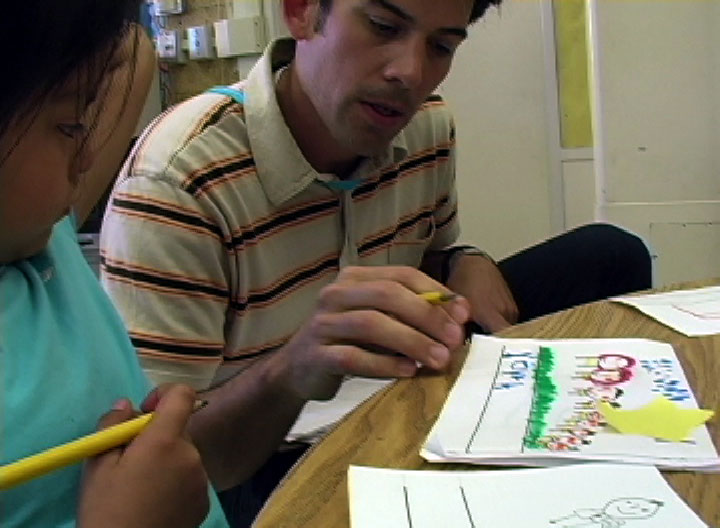
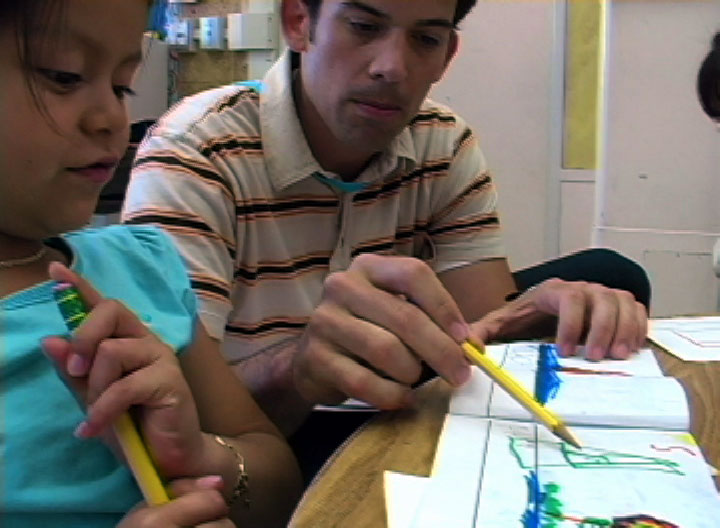
In this conference, I approach the table to talk to Martha, but since Eucrely had already picked a star to put on her story, I begin talking to her. First I complement Eucrely on her story and then I ask her why she picked her book. For conferences at this stage of the writing process, I focus on checking to see whether students have applied the mini-lesson or not.
Commentary
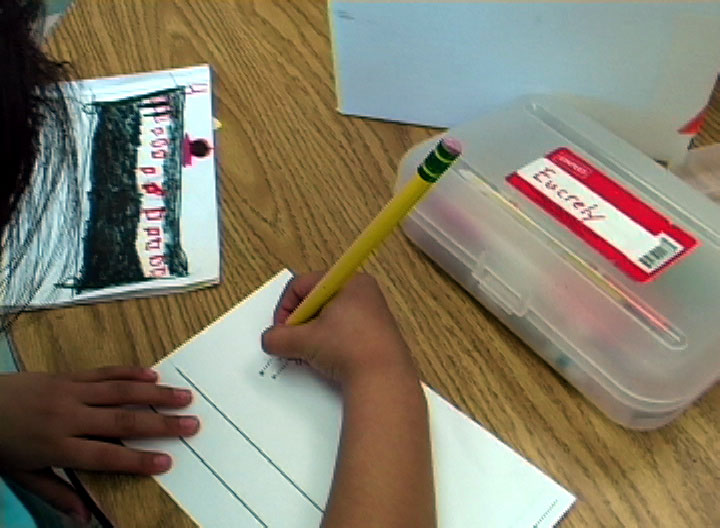
I've designed my conference recording sheet with a space to write down my compliment for each student. This space helps to remind me to compliment the student each time we sit down to talk. I complimented Eucrely for her attentive listening skills on the rug and for following through with the mini-lesson. I really felt that Eucrely had internalized the mini-lesson well because she informed me that she'd picked the book because it had pretty drawings and nice letters. Because Eucrely had followed through with this particular mini-lesson so well, during this conference I simply encouraged her to make her next book excellent also. I really like the way Eucrely starts working on another book after she finishes picking her favorite.
You'll see in this clip that I attempt to ignore another student who has completed his work and doesn't understand that, as I explained in the mini-lesson, he should work on another piece after selecting his most excellent book. Eventually I couldn't ignore him. You'll also see that the students' work materials are creating clutter at the table. Usually, I try to remove the material storage from the table but on this day, I forgot to ask my helper to do that.
Transcript
| TEACHER: |
¿Muchas que?
Lots of what? |
| STUDENT 1: |
Muchas cosas aqui, y bonitas cosas.
Lots of things here, and pretty things. |
| TEACHER: | writing |
| TEACHER: |
Me gusta mucho como tu escuchaste antes... y tu sabias que hacer.
I really like how you listened before, and you knew what to do. |
| S2 (off screen): | Mr. Limón, what should I do now? What should I do now, Mr. Limón? |
| TEACHER: |
Trabajar en otra cosa. ¿Otro libro, ok? O puedes hacer esto mas excelente, si quieres.
Work on something else. Another book, ok? Or you could make this one even more excellent, if you want. |
| STUDENT 2: | What? |
| TEACHER: |
¿Quieres hacer esto mas excelente?
Do you want to make this one even more excellent? |
| STUDENT 2: | No. It is, really! |
| TEACHER: |
Ok. ¿Trabaja en otro libro, entonces, ok?
Ok. Work on another book, then, ok? |
| Turns back to S1 | |
| TEACHER: |
Ok, muy bien. ¿Entonces, a mi me gusta como escuchaste a la alfombra, ok? Y sabias que hacer, y dijiste que tu libro tiene mas cosas que el otro.
Okay, very good. So, I like how you listened at the rug, ok? And you knew what to do, and you said that your book has more things than the other one. |
| S3: | Maestro Limón, I don't have any. |
| TEACHER: |
¿Me gusta como tu dijiste que tiene letras, verdad?
I like how you said that it has letters, right? |
| STUDENT 1: | nods |
| TEACHER: |
¿Que mas tiene?
What else does it have? |
| STUDENT 1: |
Dibujos...
Drawings... |
| TEACHER: |
Dibujos...
Drawings... |
| STUDENT 1: |
Y letras!
And letters! |
| TEACHER: |
Letras, ok. ¿Y los dibujos son excelentes?
Letters, ok. And are the drawings excellent? |
| STUDENT 1: | nods. |
| TEACHER: |
Ok, muy bien. ¿Que vas a hacer ahorita?
Okay, great. What are you going to do now? |
| STUDENT 1: |
Aqui voy a hacer mi papi, mi familia, y cuando fuimos al parque, y [inaudible] a la casa de regreso.
Here I'm going to make my daddy, my family, and when we went to the park, and [inaudible] to the house when we came back. |
| TEACHER: |
¿Y piensas que tambien vas a hacer este libro excelente?
And do you think you're going to make this book excellent too? |
| STUDENT 1: | nods |
| TEACHER: |
... ¿con dibujos y letras?
With drawings and letters? |
| STUDENT 1: | nods |