Clip Description
The day prior to this lesson, the students selected the brief that they wanted to work harder on, so they could share it with a bigger audience. (We call our work-in-progress "briefs," with the idea that these pieces will be expanded.)
In this clip, I remind the students that we spent a couple days thinking about our briefs and which piece of writing they wanted other people to know more about, or which piece they felt important enough that they share with others. Then, I introduce the idea of asking the question, why is this event important?
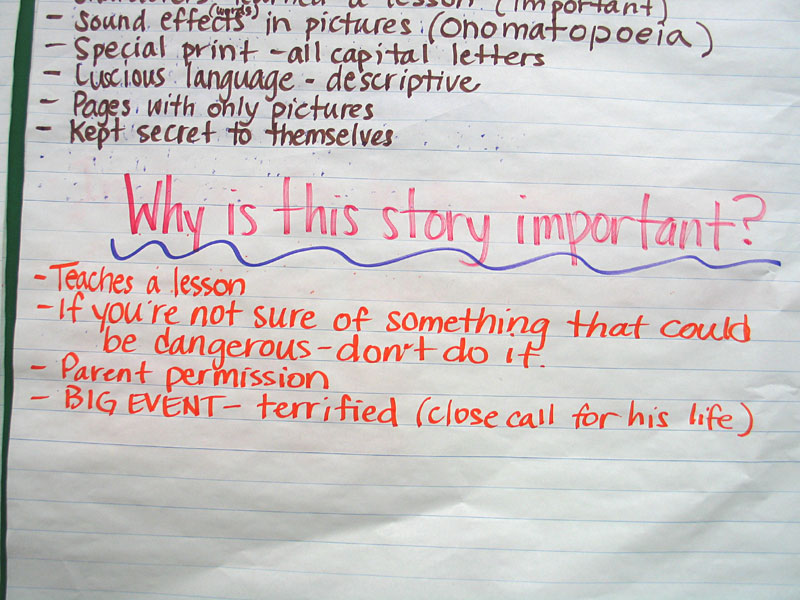
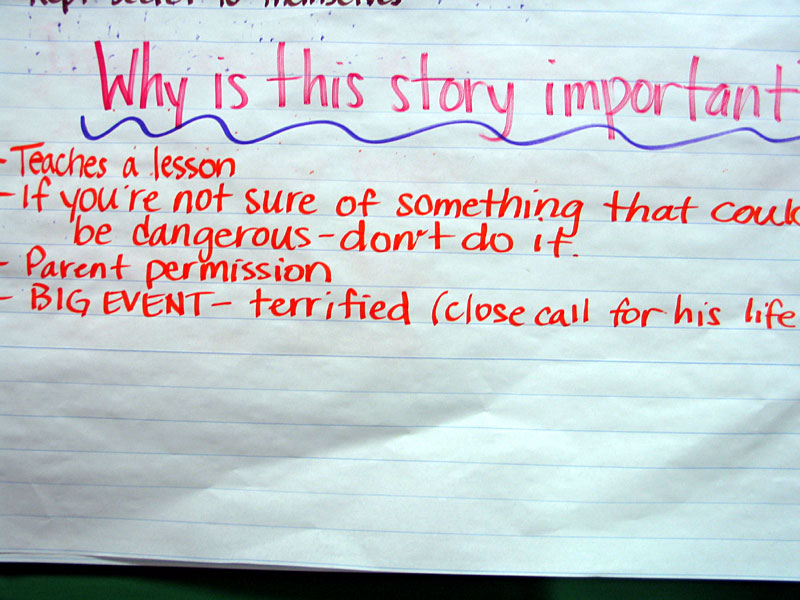
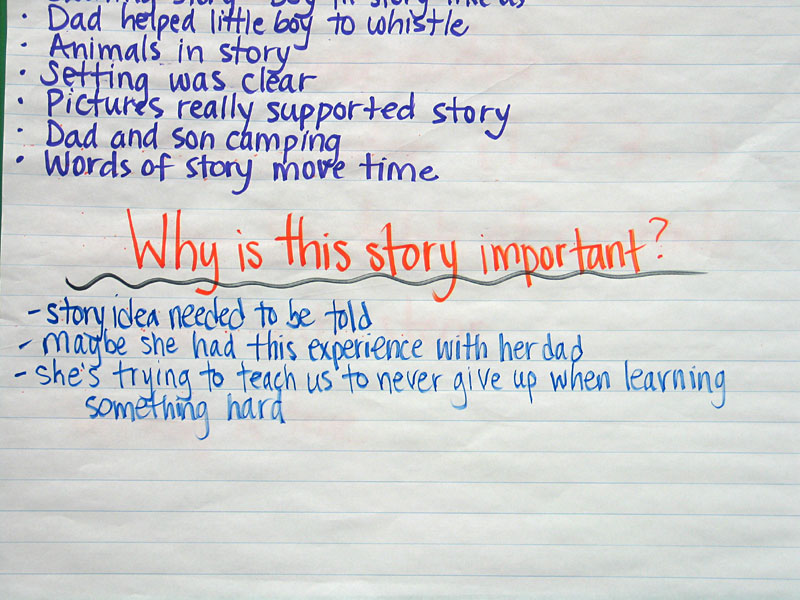
I connect today's mini-lesson to two texts we read in Readers' Workshop, Whistling by Elizabeth Partridge and Shortcut by Donald Crews. I point out that, while reading those books, we asked ourselves the same question. I then refer back to my own story about cutting my chin in the pool.
Commentary
This is the eighth day in my narrative genre study. The overall goal of this study is for students to produce a piece of narrative writing that has significance. Prior to today's lesson, I spent several days immersing the students in narrative writing and talking about what it was. We also spent about 4 days collecting narrative briefs in their sourcebooks. The students had been asked to consider writing about times when they had been injured, scared, embarrassed, a time when they were lost, and/or a time they had done something for the first or last time.
In the clip, I point out that while we couldn't be entirely certain of each author's intent when reading pieces such as Whistling by Elizabeth Partridge and Shortcut by Donald Crews, today the students - as the authors of their own pieces - will be able to determine why the piece is important.
Transcript
| TEACHER: |
All right. So yesterday in Writing Workshop we all went through out briefs. We reread all of our briefs that you had written so far and you selected one of your topics of one of your briefs that you felt was something that you wanted to share with other people. Show me if a lot of you remember that. Okay.
We selected a topic yesterday and in our closing yesterday you told me those topics. So I'd like you to put that topic back in your mind right now because we're going to be thinking a lot about that today. Today we're going to ask ourselves the question though, why? Why is that event important to us? You have the event in your minds. Why? Why was that event important? Why was it an event that you wanted other people to know about? We'll have a chance to share in just a second but I want you to think back, because we've done this work already. With our book, Whistling [by Elizabeth Partridge] and Shortcut [by Donald Crews], in Reader's Workshop, when we read those books, after we read them a couple of times and we had gone though some of the events that we had found, some of the narrative elements that we had found, we asked ourselves the question, why? Why was this book written, why did the author spend time working hard on it?, and we came up with some ideas. Now the theme that I remember some of you telling me was that, well, you thought that it might be because in Whistling, we said that maybe she had had that experience with her dad, maybe she had gone out into the woods and whistled, but we weren't sure because we weren't the author. But today you are the author. You are the one that gets to determine, why is it important, why is it a story that needs to be told? So still be thinking about that. Why, why was it important? One of the stories, if you remember, that I told you was when I jumped into the swimming pool and I turned around as I was coming down and I'd split my chin a bit. Remember I had to go to the hospital and I had to get stitches. Well, that was the story that I decided needed to be told so that's the story that I selected or the brief that I selected yesterday. So I asked myself this question. Why was this event, of jumping into the swimming pool and splitting my chin open, why was it important to me? Why did I need to tell the story? |